Commercial building construction companies in Fort Mill, SC build everything from pre-engineered warehouses off I-77 to medical buildouts near Baxter Village. Before you sign a contract, you need real numbers on cost, a clear picture of the permit path, and a way to confirm a contractor is actually licensed to do the work. This guide covers all three, plus the building types and corridors that shape every project in town.
How Much Does It Cost to Build a Commercial Building in Fort Mill, SC?
Cost per square foot swings hard based on three things: site prep (grading, utilities, stormwater detention), engineering complexity, and overall building size. Larger buildings often cost less per square foot because fixed costs like permitting and mobilization spread across more area.
National 2026 benchmarks give you a starting range, though Fort Mill and the broader Piedmont region typically price below high-cost metros like New York or San Francisco.
| Building Type | National 2026 Range ($/sq ft) | What Drives the Cost |
|---|---|---|
| Warehouse / pre-engineered metal | $78–$195 | Clear-span steel frame, minimal interior finish |
| Retail / flex-industrial | $140–$260 | Storefront glazing, mixed warehouse-office layout |
| Office build-out | $202–$574 | HVAC zoning, finish level, tenant improvements |
| Medical / dental | $300–$500+ | Specialized plumbing, electrical load, accessibility |
In 2026, residential construction costs $150–$450 per square foot and commercial construction costs $200–$574 per square foot, based on RSMeans 2026 data.
Gordian's RSMeans model for a two- to four-story office building averaged $253.63 per square foot nationally in Q2 2026, up 3.61% from $244.80 a year earlier. For a full breakdown of where those national figures come from, the RSMeans construction cost benchmarks page is a useful cross-check before you set a budget.
Treat any of these figures as a planning number, not a quote. Material pricing and local labor availability move month to month, and your actual number depends on your site, your finish level, and your contractor's current backlog.
Types of Commercial Buildings & Projects in Fort Mill, SC
Fort Mill's commercial stock isn't uniform. Different corridors call for different structures, and each one comes with its own permitting path.
Warehouse and industrial buildings generally fall into three tiers:
- Small accessory storage buildings under 3,000 square feet, usually serving one business needing extra inventory or equipment space
- Mid-size commercial shops between 3,000 and 20,000 square feet, covering everything from auto service bays to light manufacturing
- Larger distribution or flex-industrial buildings above that, combining warehouse area with office or showroom space under one roof
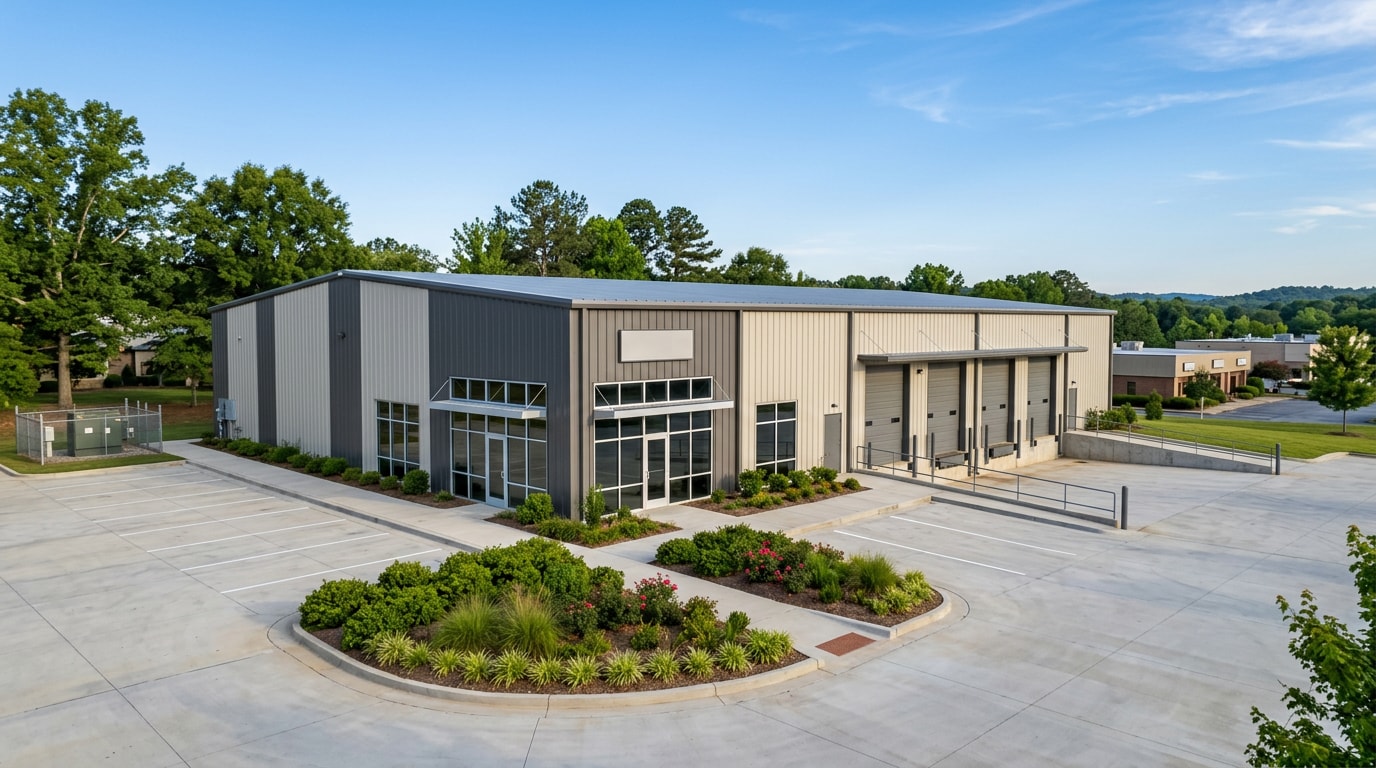
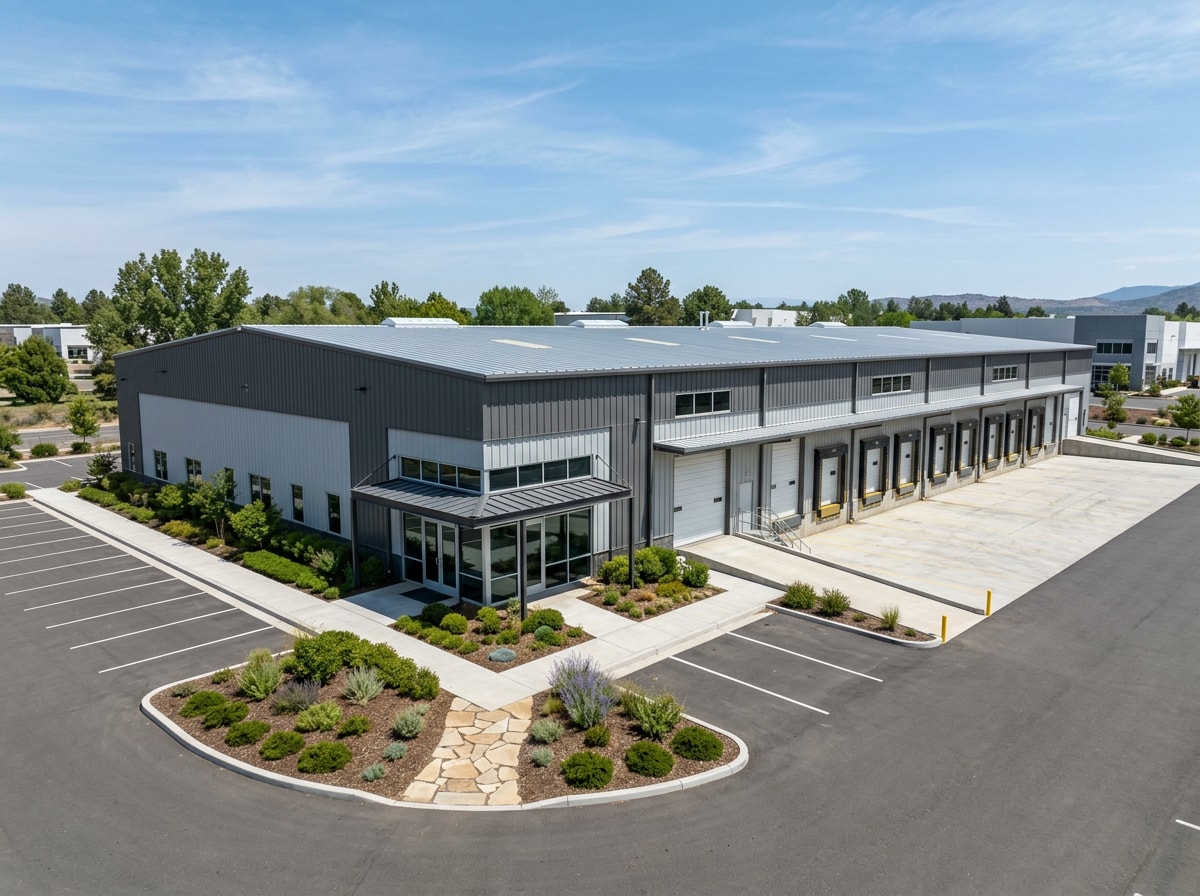
Pre-engineered metal buildings dominate the mid-size tier for a practical reason: a clear-span interior eliminates support columns, and a pre-cut steel frame arrives ready for assembly. That shortens the build schedule compared to stick-frame construction and keeps framing costs lower.
Fort Mill's commercial corridors each have a distinct character:
- Baxter Village and Kingsley reflect post-2000 mixed-use planning, with retail and medical offices built close together along walkable streets.
- The Carowinds corridor supports hotel and restaurant projects tied to seasonal tourism traffic.
- Downtown's historic Main Street buildings date back to the Springs Industries textile era and more often need tenant improvements than ground-up construction.
- The I-77 corridor continues to drive warehouse and flex-industrial growth as logistics companies expand into the region.
Medical and dental buildouts tend to cluster near walkable mixed-use areas where patient traffic is already established, while industrial and distribution projects make more sense near I-77 interchanges. If you're planning a project in the warehouse corridor specifically, our warehouse builders guide for Fort Mill walks through code and cost detail unique to that building type. You can also browse completed work on our projects page or see what we've built around town on our Fort Mill area page.
What Does the Commercial Construction Process Involve?
The path from first sketch to final permit follows a fairly consistent pattern, even though scope varies by project.
Initial Consultation and Design
Every project starts with a design consultation focused on what the space needs to do for your business. Designers and architects map traffic flow, storage, and work areas before a single wall goes up. This stage also surfaces early cost and timeline estimates, which makes it easier to adjust scope before committing to construction drawings.
Permitting in Fort Mill
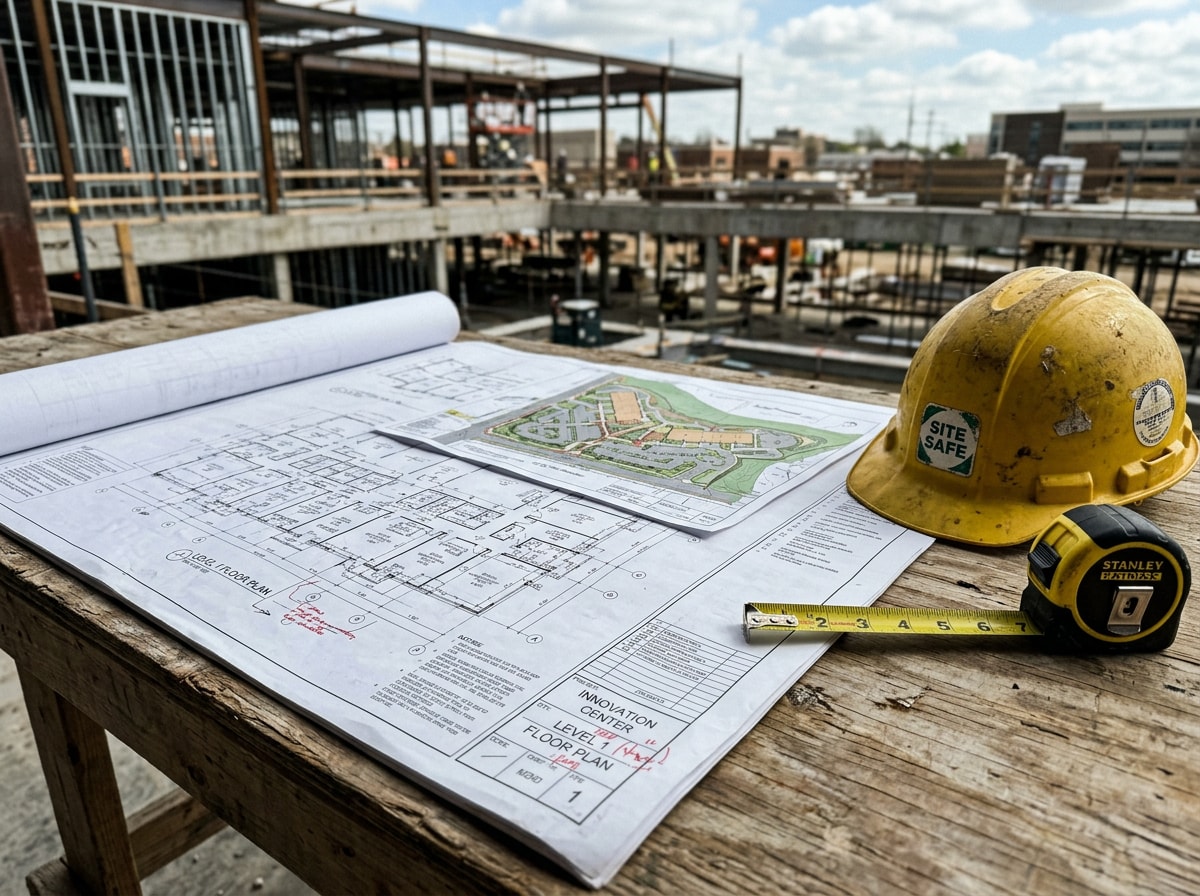
Before any physical work starts, you need a commercial building permit reviewed against the currently adopted building codes. That review confirms structural design, fire separation, accessibility, and electrical load all match what's actually being built.
Fort Mill has its own wrinkle here that trips up out-of-town contractors: the Town of Fort Mill requires a combination civil/building permit for most commercial projects, with the civil plan approved before the building permit can issue. Starting work before that civil approval can trigger stop-work orders and costly inspection delays later. On a recent Fort Mill build, a detention-pond revision alone added nearly three weeks to the civil review; building that kind of buffer into your schedule up front avoids a lot of frustration later.
South Carolina bases its commercial code on a national model code with state-specific amendments. On August 26, 2025, the South Carolina Building Codes Council adopted the latest editions of the mandatory codes , with the 2024 International Residential Code replacing the 2021 IRC that has been in effect since January 1, 2023 , enforceable statewide starting January 1, 2027. You can review the full South Carolina code adoption notice to see exactly which edition applies to your project's permit date. Fort Mill's own permitting forms and fee schedules are posted on the Town's permitting documents page if you want to see the submittal checklist before you meet with a contractor.
Why Work With a Licensed Commercial Contractor in Fort Mill
Confirm licensing before you hire anyone. South Carolina requires a general contractor license from the SC Contractors Licensing Board for projects over $5,000. That threshold covers nearly every ground-up commercial project and most tenant improvements.
Checklist before you sign anything:
- Ask for the license number directly, not just a business card or website claim.
Use the South Carolina Contractor's Licensing Board's online Licensee Lookup at llr.sc.gov/clb to confirm the license is active and matches your project type and value.
- Confirm the contractor also holds a current Town of Fort Mill business license, since
all contractors who work on any project inside the incorporated town limits of Fort Mill must have a valid Town of Fort Mill business license at the time of obtaining a permit.
- Ask whether they've pulled permits in Fort Mill or York County before, or whether this would be their first project in the jurisdiction.
Licensing is the floor, not the full picture. A contractor with local permitting experience knows which reviewers flag which issues and which code sections apply to your specific building type. That local knowledge tends to produce fewer change orders and a cleaner finish.
Planning Your Fort Mill Commercial Construction Project
Once you understand building type, rough costs, and the permit path, planning turns practical. Build a realistic budget with contingency for site surprises, and treat design, permitting, and construction as separate phases with their own timelines. Unexpected soil conditions or utility relocations are common and rarely show up in early estimates.
If you're leasing your Fort Mill business space rather than owning it, loop in your landlord early. Lease terms often dictate who approves design changes, who holds the permit, and how buildout costs get split. Getting that alignment before design work begins avoids rework later.
When you're ready to put real numbers to your project, get a free estimate and we'll walk through scope, cost, and timeline together. You can also start on our homepage to see the full range of building services we offer across York County.
FAQ
Do I Need a Permit to Build a Commercial Building in Fort Mill, SC?
Yes. The Town of Fort Mill requires a commercial building permit for new construction, and most projects need a combined civil/site and building permit submitted together. Contractors working inside town limits also need a valid Town of Fort Mill business license at the time the permit is issued.
What's the Difference Between a Civil Permit and a Building Permit in Fort Mill?
The civil/site permit covers grading, utilities, drainage, and stormwater detention for the lot. The building permit covers the structure itself. In Fort Mill, the civil plan generally has to be approved first, since the building permit can't be issued without it.
How Long Does It Take to Build a Commercial Building in Fort Mill, SC?
A small building under 5,000 square feet can go from permit to occupancy in 8 to 14 weeks once site work starts. Larger buildings with fire sprinkler requirements or detention pond design typically run longer, since those features add extra review cycles with the fire marshal and stormwater departments.
Who Is Responsible for Paying for Commercial Construction, the Landlord or the Tenant?
This is negotiated in your commercial lease agreement and varies by property and landlord. In some arrangements, the landlord covers a base buildout allowance and the tenant pays for upgrades beyond it. In others, the tenant covers the full cost in exchange for lower rent or a longer lease term.
How Do I Verify a Commercial Contractor's License in South Carolina?
Search the contractor's name or license number on the South Carolina Contractor's Licensing Board's public Licensee Lookup tool. Confirm the license is active, matches the classification needed for your project, and covers a project of your dollar value.
How Do You Handle Plumbing and Electrical Changes in an Existing Commercial Building?
Plumbing and electrical changes inside an existing commercial building should go through licensed trades, since this work is inspected separately from general construction. A full-service commercial contractor typically keeps licensed plumbers and electricians on the team, coordinating MEP changes with the rest of the renovation schedule instead of creating separate delays.