If you're comparing ADU construction companies in Indian Land, SC, you're probably juggling three questions at once: what Lancaster County will actually let you build, what the project costs from groundbreaking to move-in, and which builder can carry it through without surprises. Indian Land's larger suburban lots make backyard cottages, in-law suites, and garage apartments more realistic here than in older, tighter Charlotte neighborhoods. Here's what to confirm before you sign a contract.
What Is an ADU? Definition, Names & How It Works With Your Home
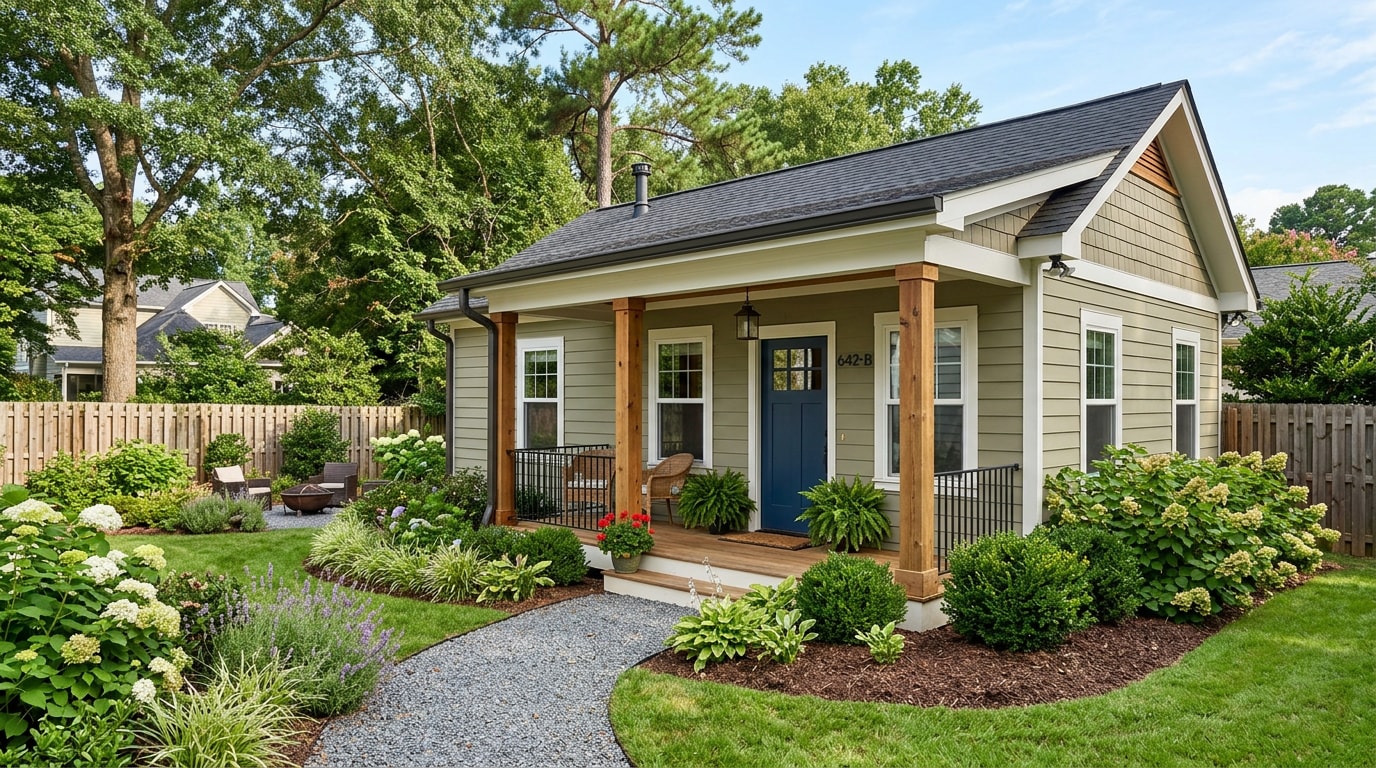
An accessory dwelling unit, or ADU, is a secondary, code-compliant living space built on the same lot as a single-family home. An Accessory Dwelling Unit refers to a habitable living unit added to, created within, or detached from a primary one-unit single-family dwelling, with the two together functioning as one residential property. Common names for the same structure include backyard cottage, granny flat, in-law suite, and guest house.
An ADU doesn't replace your primary residence, it adds to it. The main home stays the central living space, while the ADU serves a specific purpose: housing aging parents, giving adult children a semi-independent space, or generating rental income. Indian Land's larger lots, especially in newer Lancaster County subdivisions, tend to have more usable backyard space than older Charlotte-area neighborhoods, which makes detached ADUs a realistic option for a lot of homeowners here.
Our crews have graded sloped lots across Lancaster County for detached builds, and the setback and subordinate-size rules are usually what catch homeowners off guard, not the design itself. For a closer look at how an ADU fits into a broader home plan, see this home builder construction guide for Indian Land.
Zoning & Permitting Rules for ADUs in Indian Land, SC (2026)
South Carolina has no single statewide ADU law. Rules are set county by county and municipality by municipality, so Indian Land's Lancaster County requirements can differ meaningfully from Charlotte, NC rules just a few miles north across the state line.
Lancaster County's development ordinance requires that any accessory dwelling remain clearly subordinate in size to the main structure on the lot. Beyond that size rule, local restrictions typically touch on:
- Owner-occupancy, often requiring the homeowner to live in either the main house or the ADU
- Minimum setback requirements from property lines
- A size cap tied to a percentage of the primary home's square footage
- Height limits for detached structures
| Factor | Lancaster County, SC (Indian Land) | Charlotte, NC |
|---|---|---|
| Owner-occupancy | Commonly required on one unit | Varies by zoning district |
| Size cap | Tied to a percentage of main home size | Similar percentage-based approach |
| Setbacks | County-standard setback rules apply | City setback rules differ by district |
| Permitting authority | Lancaster County Planning & Building | City of Charlotte / Mecklenburg County |
These are general patterns, not guarantees. Always confirm current requirements directly with Lancaster County's Use Regulations ordinance before finalizing a design, since zoning districts and parcel history can change what's allowed on a specific lot.
Which ADU Type Fits Your Property
Choosing between an attached unit, a detached cottage, or a garage conversion comes down to three things: your lot's shape and slope, your budget, and how you plan to use the space day to day. It's a fit question, not a ranking.
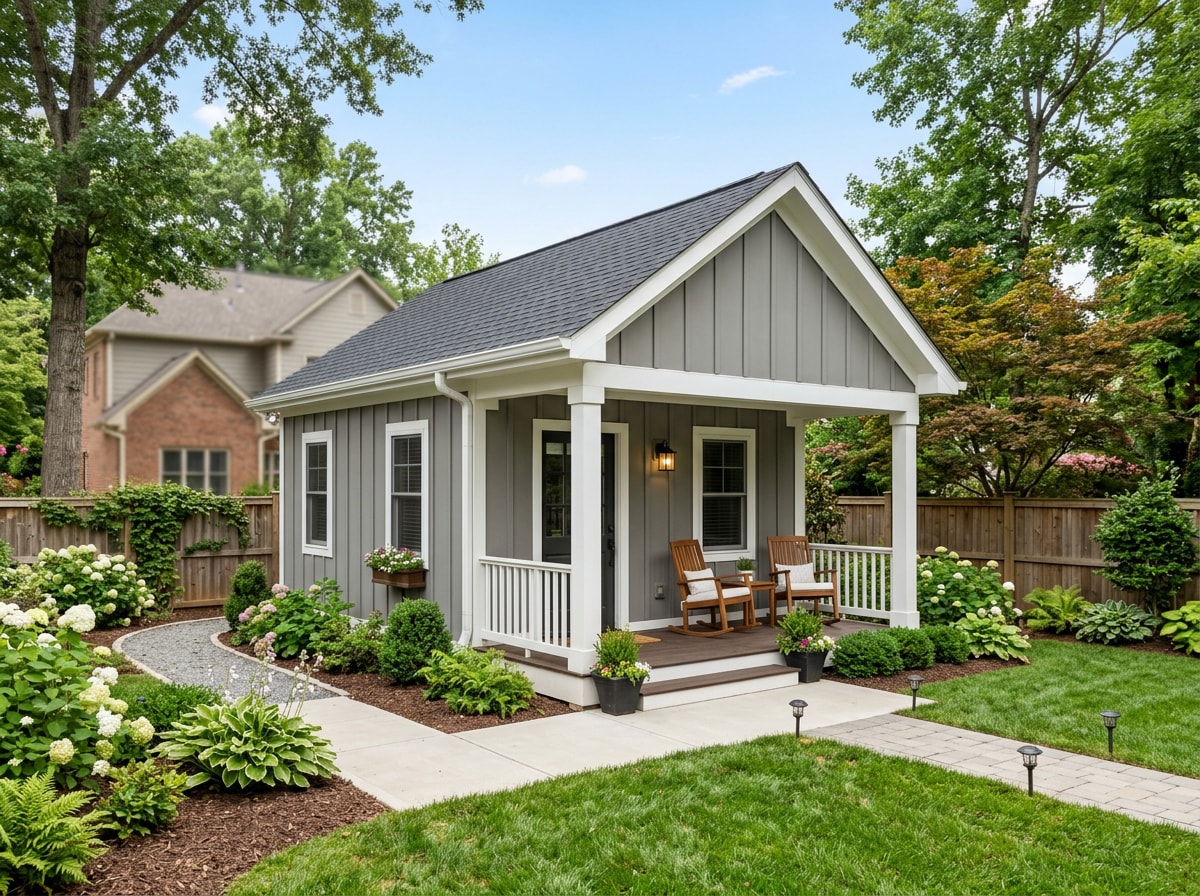
- Garage apartment conversion works well when an existing structure can be converted affordably.
- Attached ADU suits tighter lots where tying into existing utilities saves money.
- Detached ADU offers the most privacy and flexibility on Indian Land's larger parcels, though it typically costs more.
How to Choose the Right Layout
Start with how the space needs to function. A rental unit has different requirements than a guest suite for visiting family. Next, assess your yard's shape, slope, and access points, since a narrow or sloped lot limits where a detached structure can sit. Finally, set a realistic budget range before you fall in love with a floor plan.
A design-build approach, where one company handles both planning and construction, keeps these decisions coordinated instead of siloed between an architect, a permitting consultant, and a separate contractor. Homeowners weighing these options for a property in Indian Land often start by walking the yard with a builder before settling on a layout, which is also where many of our own consultations begin.
What It Costs to Build an ADU in Indian Land
ADU cost varies by type, size, and finish level, and the return comes in different forms: rental income, added resale value, or avoided costs from assisted-living or multigenerational housing arrangements. There's rarely one "right" budget; it depends on what the space needs to accomplish.
Typical Cost Ranges by ADU Type
A garage apartment conversion is usually the most affordable path since it reuses an existing structure, while a fully detached ADU with new foundation, utilities, and finishes sits at the higher end.
| ADU Type | Low-End | Mid-Range | High-End |
|---|---|---|---|
| Garage apartment conversion | $85,000 | $120,000 | $160,000 |
| Attached ADU | $110,000 | $150,000 | $200,000 |
| Detached ADU | $130,000 | $175,000 | $240,000 |
Treat these as a planning baseline, not a quote. Material pricing, labor availability, and site conditions all move the number. For site-specific numbers, request a project estimate before committing to a design.
What Drives the Price Up or Down
Three variables drive most of the price swing:
- Size. A larger footprint adds materials and labor cost in a fairly linear way.
- Finish level. Builder-grade versus custom cabinetry and flooring can shift the budget by tens of thousands of dollars.
- Site complexity. Sloped, wooded, or poorly accessed lots need extra grading or longer utility runs, which adds cost fast.
Site work is often the line item homeowners underestimate most. If your lot needs grading or utility trenching before framing starts, our residential site preparation team usually gets involved early so the ADU budget reflects reality, not a best-case scenario.
How to Choose an ADU Construction Company in Indian Land
Most of the names that show up when you search for a builder are review-aggregator listings, not a vetted comparison. Before you request a quote, check for:
- SC licensing, bonding, and insurance, confirmed directly, not just claimed on a website
- Hands-on Lancaster County permitting experience, since setback and subordinate-size rules trip up builders who mostly work across the state line
- Design-build capability, so design, permitting, and construction run through one point of contact
- A visible portfolio of completed ADU or addition work, not just renderings
- A written scope and cost breakdown before you sign, not a verbal estimate
- A workmanship warranty that outlines what's covered after move-in
You can review completed work on our projects page, and our accessory dwelling unit construction page covers how we scope and price these builds specifically. If your project is closer to a traditional addition than a standalone unit, our home additions team can walk through which approach fits.
The ADU Construction Process: From Idea to Move-In
Working with a local builder typically moves through four stages: consultation, design and permitting, construction, and final inspection. Knowing this sequence upfront sets realistic expectations for timeline and communication.
Design & Planning
This phase covers a site assessment (placement, sun orientation, privacy from neighboring homes) and zoning research specific to the parcel. From there, the builder develops conceptual floor plans and begins utility planning, sizing an electrical sub-panel and mapping water and sewer tie-ins so the design matches what the lot can actually support.
Permitting delays almost always trace back to incomplete site or zoning review at this stage, not to construction itself. The 2024 International Residential Code recognized this gap directly: it added a dedicated appendix covering design and construction standards for accessory dwelling units as an alternative to two- and multiple-family residential construction , which is now shaping how many jurisdictions, including growing Carolina counties, write local ADU rules. You can review the IRC appendix structure if you want to see how code bodies are standardizing ADU construction nationally.
Construction & Final Inspection
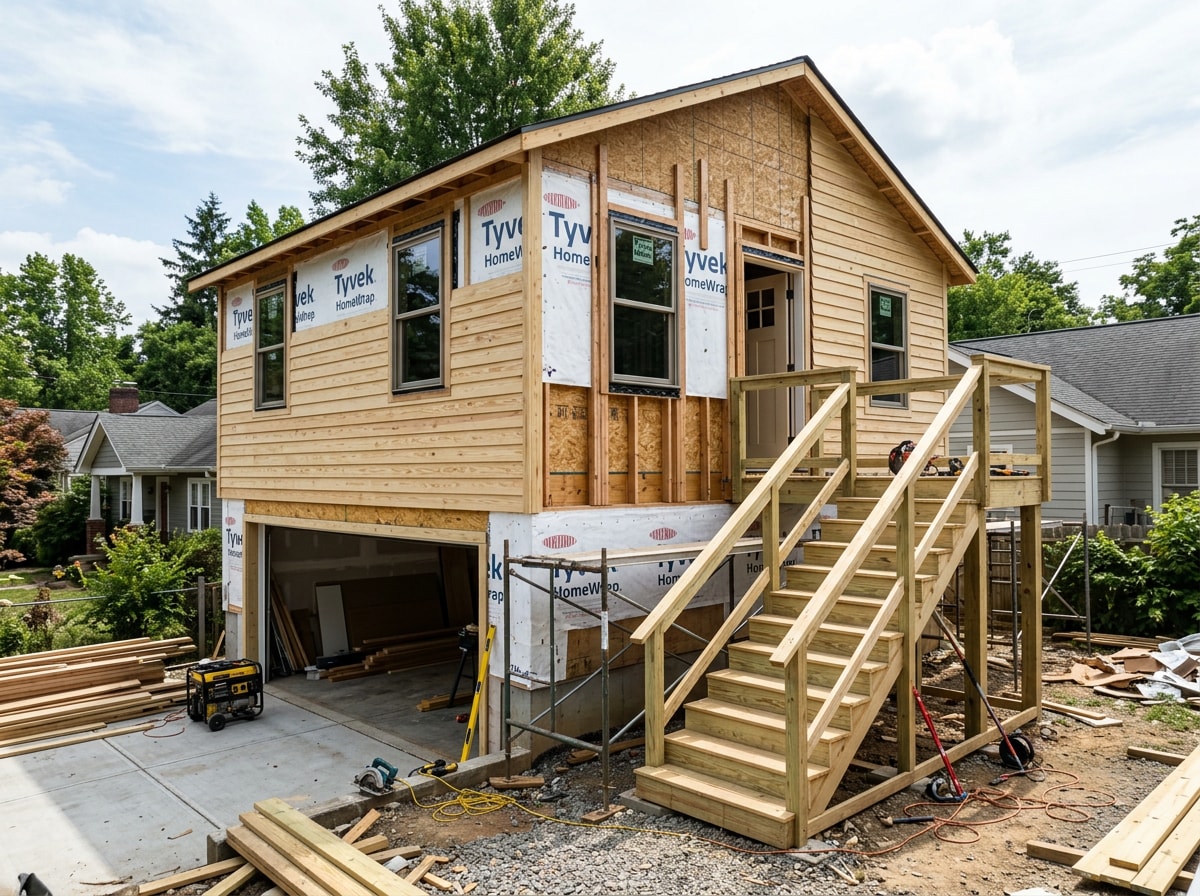
Once permits clear, site prep and foundation work come first, followed by framing, mechanical and electrical rough-in, and finishes. A final inspection confirms the unit meets code before you get a certificate of occupancy. Get a free estimate once you have a rough scope in mind, and we'll walk the property with you before you commit to a design.
For homeowners comparing build methods, our modular home builder guide for Indian Land covers how factory-built options stack up against a traditional stick-built ADU on cost and timeline.
FAQ
How Long Does It Take to Build an ADU?
Most ADU projects take roughly four to eight months from permitting through completion, though this stretches on properties with complex site conditions or when local permitting offices face backlogs. Detached units with new foundations generally take longer than garage conversions.
How Much Does It Cost to Build an ADU in Indian Land, SC?
Expect a realistic range of roughly $85,000 to $240,000 depending on ADU type, size, and finish level. Garage conversions land at the lower end, while fully custom detached units with premium finishes push toward the top of that range.
Are ADUs Legal in Lancaster County, SC?
South Carolina has no blanket statewide ADU law, and Lancaster County allows ADUs in some zoning districts but not universally across every parcel. Confirm your specific property's zoning status directly with Lancaster County's planning department before designing anything.
Do I Need a General Contractor to Build an ADU?
In most cases, yes. Permitting, structural work, and utility tie-ins in Lancaster County typically require a licensed contractor to pull permits and sign off on inspections. A design-build company can also save time by handling design and construction under one contract instead of coordinating separate parties yourself.
Can I Use an ADU as a Rental Property?
Long-term rentals are generally allowed where local zoning permits ADUs, making them a popular option for steady rental income or multigenerational housing. Short-term rental rules, like Airbnb restrictions, vary by jurisdiction and should be confirmed with the county before listing.
Does Building an ADU Add Value to My Home?
An ADU typically adds resale value by increasing usable square footage and rental potential, though the exact return depends on your neighborhood, finish quality, and how buyers in your market value secondary living space. It's worth discussing expected ROI with your builder before finalizing the scope.
Ready to find out what an ADU looks like on your specific lot? Visit the homepage to see our full range of services, or get a free estimate to start the conversation.