Project management for residential construction in York, SC is the difference between a custom home that finishes on schedule and one buried in change orders and missed inspections. Spargo Construction has coordinated custom builds, additions, and site work across York County long enough to know exactly where projects go sideways: permit sequencing and subcontractor scheduling, almost every time. This guide breaks down what a project manager actually does on a York County build, what the county's permit process costs in 2026, and how to tell whether your project needs dedicated oversight.
Visit Spargo Construction Management Inc. to see our services and request a free estimate.
What a Residential Construction Project Manager Does in York County
Full project management covers everything between a signed contract and a finished home. It is not just scheduling trades, it is coordinating every moving piece so one delay doesn't cascade into three.
On a typical York County residential project, that work includes:
- Pre-construction planning — site feasibility, budget development, and permit prep before any trade touches the property
- Permit coordination — tracking submittals across building, electrical, plumbing, mechanical, and zoning review
- Subcontractor scheduling — sequencing trades so one late delivery doesn't stall the whole crew list
- Budget and change-order tracking — flagging cost shifts early instead of discovering them at closeout
- On-site quality coordination — walking the job between inspections to catch issues before they're buried behind drywall
- Closeout and final walkthrough — confirming punch-list items and final inspections are actually done, not just scheduled
Without that oversight, homeowners often end up acting as the general contractor by default. They're chasing electricians, tracking lumber deliveries, and absorbing change orders nobody flagged early enough to avoid. Subcontractor coordination failures are one of the most common sources of residential delays we see on projects that start without a dedicated manager.
General Contractor vs. Project Manager: Why the Distinction Matters
A general contractor executes the build. A project manager oversees the GC, the budget, and the schedule as the homeowner's advocate, not the builder's. On a small single-trade repair, that distinction barely matters. On a ground-up custom home or a multi-trade renovation, it's the layer that keeps everyone accountable to the same timeline.
The Construction Management Association of America publishes industry standards of practice covering exactly this kind of oversight: cost management, schedule management, and quality control as distinct disciplines from construction execution itself. That's the model worth asking about before you sign a contract.
If you're not sure which structure fits your project, contact us for a free estimate and we'll walk through both options with you before any ground is broken.
Self-Managed vs. Professionally Managed Builds
| Self-Managed Build | Professionally Managed Build | |
|---|---|---|
| Who tracks the schedule | Homeowner, between trades | Dedicated project manager, pre-sequenced |
| Change-order visibility | Often caught after the fact | Flagged during pre-construction review |
| Permit follow-up | Homeowner calls each department | One point of contact tracks every submittal |
| Example scenario | A rescheduled electrician stalls the kitchen remodel, pushing the plumber and drywall crew back in a chain reaction | A one-day trade delay is absorbed without cascading through the rest of the schedule |
Types of Residential Projects We Manage in York County
Not every York County project needs the same kind of oversight. A ground-up custom home and a historic renovation come with very different coordination challenges.
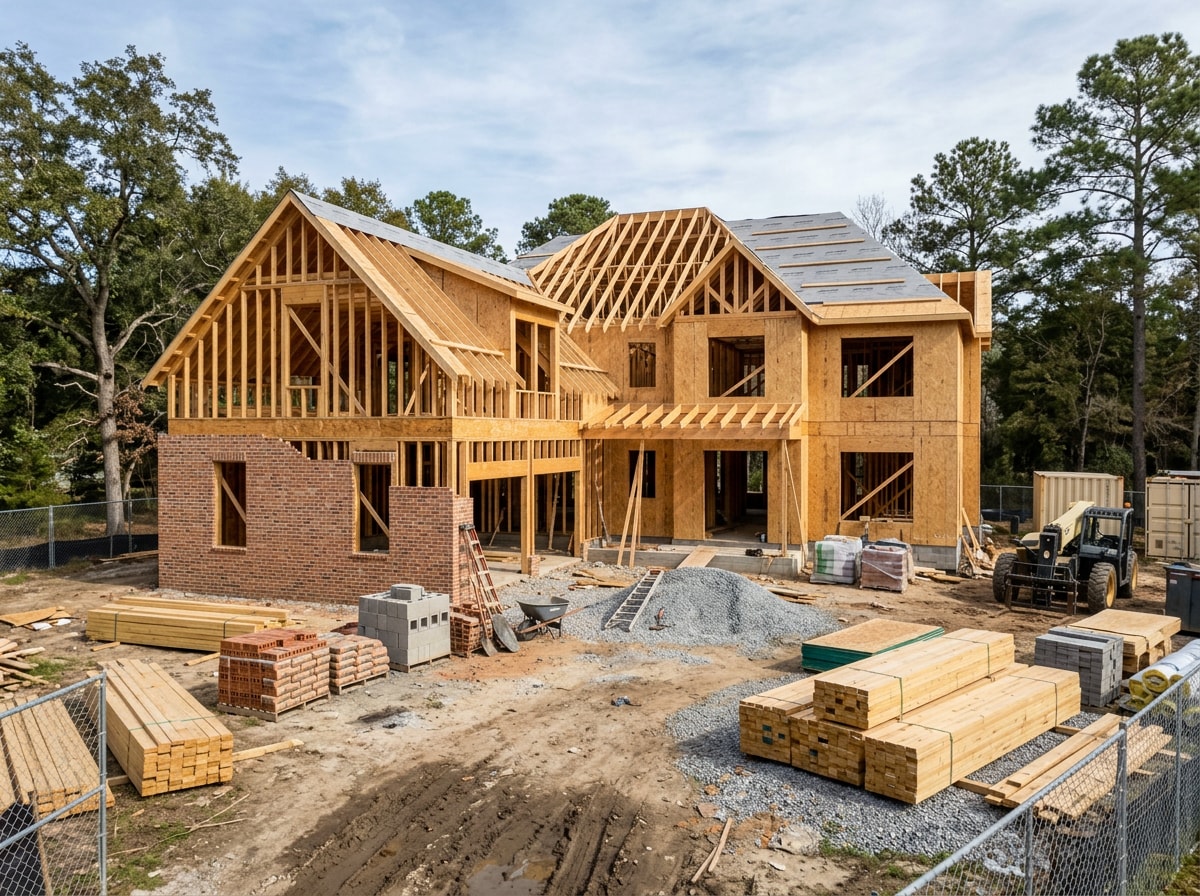
New Custom Home Construction
Custom builds start with site feasibility, soil testing, drainage, and lot conditions before any foundation work begins. From there, project management covers selecting the right foundation system, sequencing framing and mechanical trades, and verifying HVAC and energy systems meet current code. Learn more about our custom home construction services, residential site preparation, and residential framing.
Home Additions and Renovations
Additions and whole-home renovations require tying new structural work into an existing envelope without disrupting the parts of the house that aren't being touched. See our home additions page for how we scope and sequence that work.
Historic Home Modernization
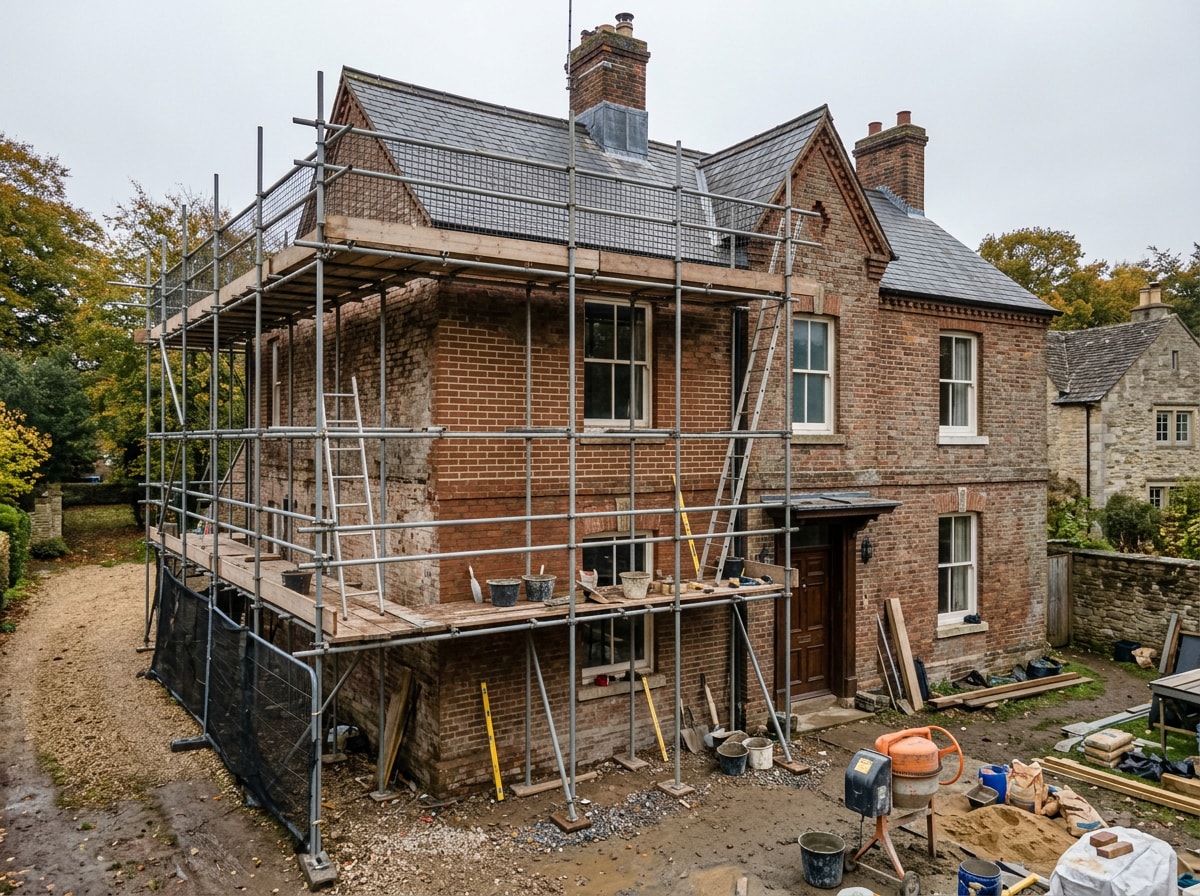
Properties inside York's historic downtown district often involve rewiring, HVAC updates, and roofing work inside structures that weren't built to modern code, a different challenge than new construction. Properties inside a historic district may require additional design review before permits are issued, so it's worth confirming that status early. The Secretary of the Interior's Standards for Rehabilitation are the reference point most reviewers use when evaluating exterior changes to a historic structure.
ADUs and Acreage Development
Accessory dwelling units and rural lot development add their own layer: private road access, drainage design, and site clearing all need to be sequenced before vertical construction starts. See our accessory dwelling unit construction page for scope details.
How the York County Building Department Review Process Works
Residential permit applications in York County route through several reviewers at once: building, electrical, plumbing, mechanical, zoning, and stormwater, each checking plans against their own code section. Jurisdiction matters here too. Unincorporated York County (plus the towns of Hickory Grove and Sharon) issues permits through the county's Planning & Development Services office, while incorporated towns like Fort Mill, Tega Cay, Clover, and Rock Hill run their own permitting departments under local amendments.
A project manager's job during plan review is largely about knowing which office a given property falls under and keeping each reviewer's comments moving instead of sitting in a queue. The York County residential permits page outlines current submittal requirements and which jurisdictions the county office covers directly.
York County Permit Fees and Plan Review Timelines in 2026
York County calculates building, electrical, gas, mechanical, and plumbing permit fees on a sliding scale tied to declared construction value, not a flat percentage:
| Construction Value | Fee |
|---|---|
| $1,000 and under | $17 |
| $1,001–$50,000 | $17 for the first $1,000, plus $7 per additional $1,000 |
| $50,001–$100,000 | $360 for the first $50,000, plus $6 per additional $1,000 |
| $100,001–$500,000 | $660 for the first $100,000, plus $5 per additional $1,000 |
Incorporated towns set their own schedules. Fort Mill, for example, charges $25 for permits valued at $1,000 or under, with its own per-thousand-dollar increments above that, separate from the county's rates.
On top of permit fees, York County collects school district impact fees on new residential construction. These vary by district and change periodically. As of December 16, 2025, the Clover School District rate is $8,000 per single-family unit, $5,236 per mobile home, and $3,952 per multi-family unit, applied to new residential development within that district's boundary, including inside town limits. Confirm the current rate for your specific district before finalizing a budget, since these ordinances get updated by County Council throughout the year.
One more 2026 timing issue worth flagging: South Carolina's Building Codes Council adopted the 2024 editions of the IBC, IRC, and related codes in August 2025, but set the statewide implementation date for January 1, 2027. The 2021 code family governs every permit pulled through the end of 2026. The South Carolina LLR Building Codes Council's adoption notice has the full modification index if your project timeline straddles that transition. The state's energy standard, meanwhile, stays fixed at the 2009 IECC by statute regardless of which structural code cycle is in effect.
A clean, complete submittal moves through review faster than a package missing documentation. Incomplete submissions can add weeks as reviewers kick plans back for corrections, so having a manager who knows what each department expects on first submittal is worth more at this stage than almost any other point in the project.
Serving York County and the Surrounding Piedmont
Spargo Construction manages custom homes, additions, and site work across York, SC and the surrounding communities, including Lake Wylie, Clover, Rock Hill, Fort Mill, and Indian Land. You can review recent work on our projects page, and for a deeper look at how we structure oversight on larger builds, read our Construction Project Management Services in York, SC guide.
Ready to talk through your project? Get a free estimate and we'll map out the permit path, budget, and schedule before you commit to anything.
FAQ
What does a residential construction project manager do?
A project manager coordinates subcontractors, tracks the budget and schedule, manages permits and inspections, and serves as the homeowner's single point of contact throughout the build.
What's the difference between a general contractor and a project manager?
A general contractor executes the build and manages trades on-site. A project manager oversees the GC, budget, and schedule as the homeowner's advocate, a separate layer of accountability rather than a replacement for the GC.
How much does it cost to build a custom home in York County, SC?
Costs vary widely by size, finishes, and lot conditions. Luxury custom homes in York County typically start in the mid-six-figure range and climb from there based on scope.
How long does it take to get a building permit in York County, SC?
A clean, complete submittal clears review faster than one requiring corrections. Incomplete packages can add several weeks to the overall timeline, which is why pre-submittal review matters.
How much are York County impact fees in 2026?
Impact fees apply only to school districts that have adopted them and vary by district. As of December 2025, the Clover School District charges $8,000 per single-family unit; other districts may have different rates or none at all, so confirm with the county before budgeting.
Will the 2027 building code change affect my 2026 project?
Not directly. Projects permitted through December 31, 2026 fall under the 2021 code family. The 2024 codes take effect January 1, 2027, so timing matters most for projects that might slip permit submittal into early 2027.
Do you need a project manager for a home renovation?
It depends on scope. Multi-trade, structural, or larger renovations benefit most from dedicated oversight, while a small single-trade repair usually doesn't require one.