An electrical construction company in Lake Wylie, SC does more than wire outlets — it sequences rough-in, inspections, and licensed trade work into your build schedule so nothing gets ripped out of a finished wall later. If you're planning a new home, addition, or lake-lot remodel, the contractor managing that schedule matters as much as the electrician doing the work. Here's how electrical construction actually fits into a project in York County, and what to check before you sign anything.
How an Electrical Construction Company Fits Into Your Build
In South Carolina, electrical trade work and general construction are licensed separately. A general contractor manages the project; a licensed electrical contractor (or residential specialty contractor) pulls the electrical permit and performs the wiring itself.
That split matters because the two have to stay in sync. If your framing crew, electrician, and inspector aren't working off the same schedule, you get delays, change orders, or walls that have to be opened back up.
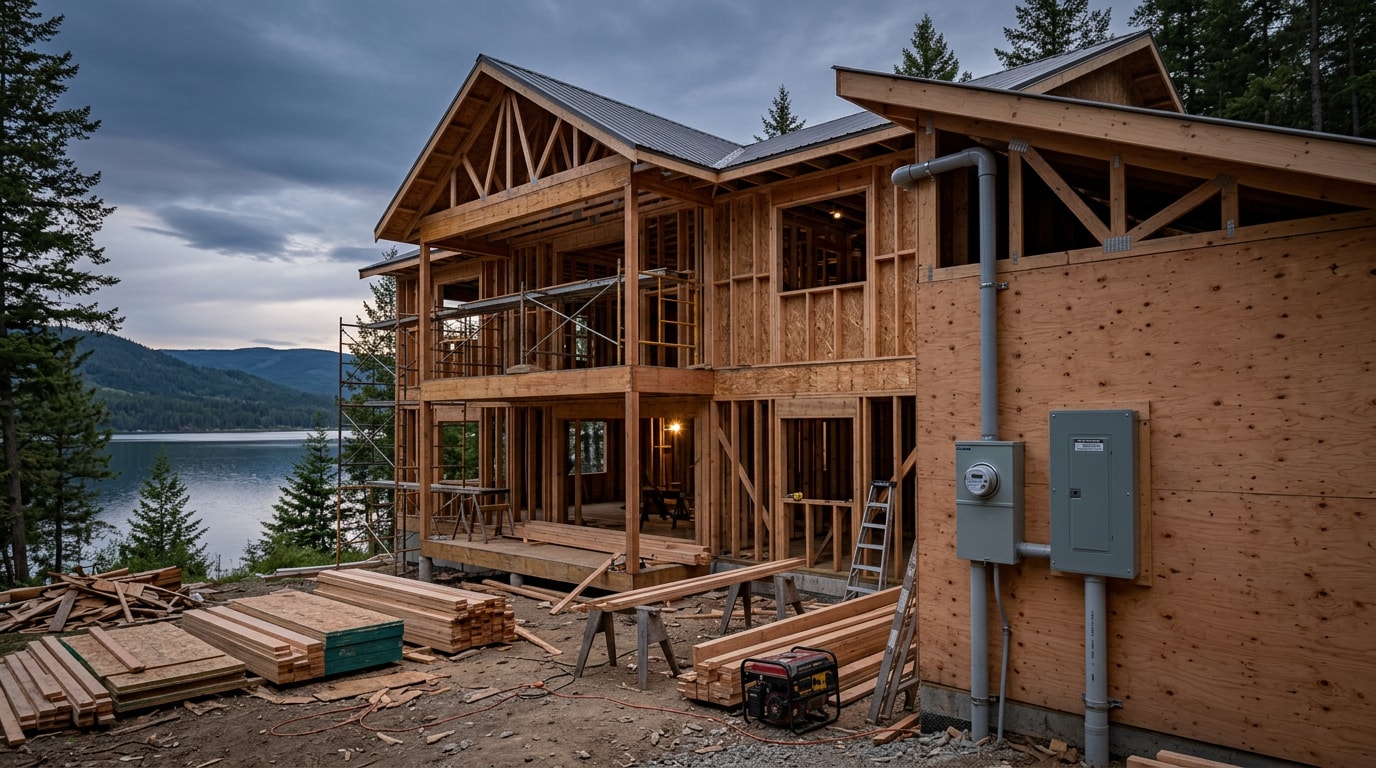
On our Lake Wylie builds, we schedule electrical rough-in only after framing passes inspection, because relocating a panel after drywall means cutting into finished walls to fix it. That one sequencing decision avoids most of the rework we see on jobs where a homeowner hired an electrician directly without a general contractor coordinating the full build.
See how we structure a full build from site work to trim-out on our custom home builder services page, or start with our Custom Home Construction page for the full process.
Where Electrical Work Falls in the Construction Schedule
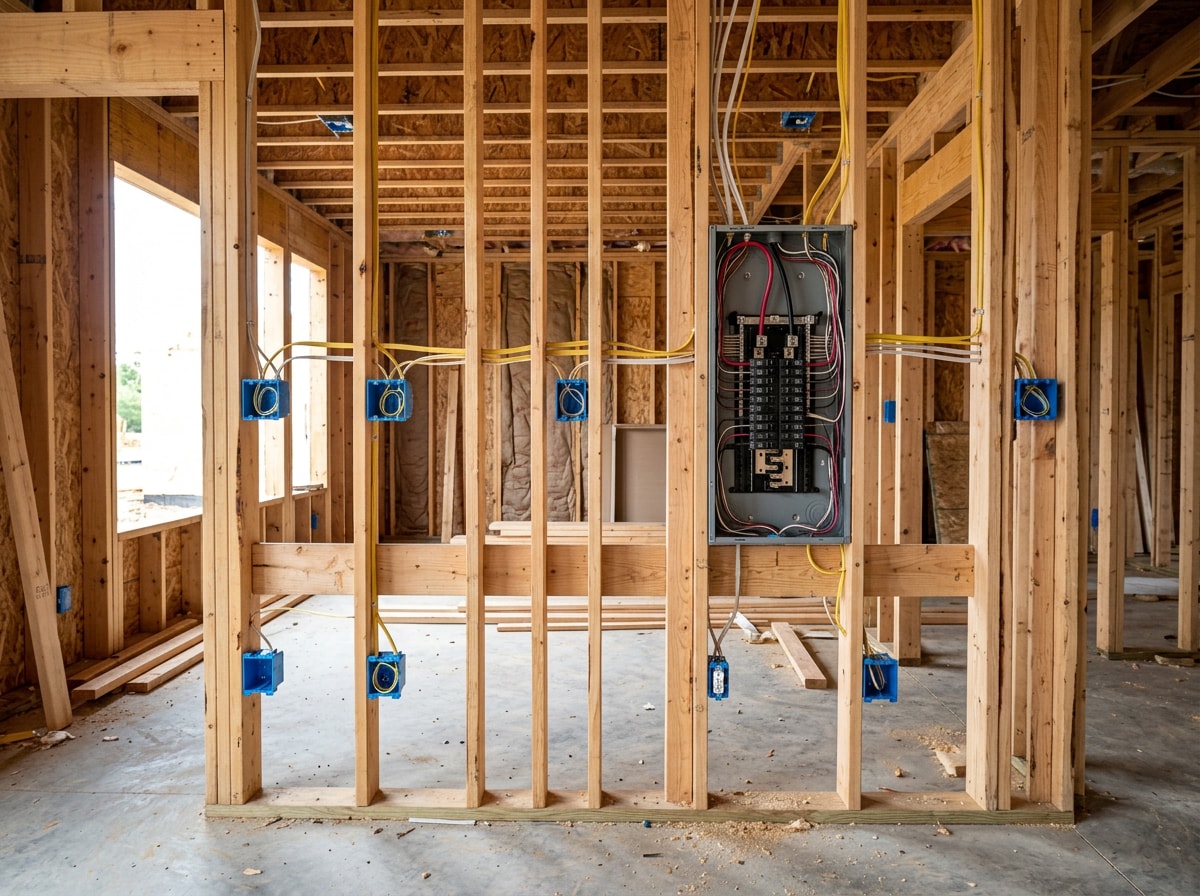
Electrical construction isn't one step — it's spread across the entire build, and each phase depends on the one before it.
- Site preparation — utility locates, trenching for underground service, and grading around the future panel location.
- Framing — rough openings and backing are set so the panel, meter base, and major fixtures land in the right spot.
- Rough-in — wiring, boxes, and conduit go in before insulation and drywall.
- Rough-in inspection — the local building department signs off before walls close.
- Trim-out — devices, fixtures, and the panel cover go on after drywall and paint.
Our Residential Site Preparation and Residential Framing teams coordinate directly with the electrical trade at each of these handoff points so inspections pass the first time.
Electrical Planning for Additions and ADUs in Lake Wylie, SC
Home additions and accessory dwelling units carry their own electrical questions: does the existing panel have enough capacity, or does the project need a subpanel or a full service upgrade?
That decision gets made early, during design, not after framing is already up. We size electrical capacity as part of the Home Additions and Accessory Dwelling Unit Construction planning process so the electrical trade isn't guessing once walls are framed.
Lake-Lot Electrical: GFCI, Docks, and Water-Adjacent Wiring
Waterfront lots around Lake Wylie carry electrical risk that inland properties don't. Outlets on decks, docks, and outdoor kitchens near the water need ground-fault protection, and the margin for error is smaller than people assume.
OSHA's construction wiring standard requires that all 120-volt, single-phase, 15- and 20-ampere receptacle outlets on construction sites, which are not a part of the permanent wiring of the building or structure and which are in use by employees, shall have approved ground-fault circuit interrupters for personnel protection . That same GFCI logic carries over into finished outdoor electrical work on lake lots, where water and current in close proximity turn a wiring mistake into a safety hazard, not just a tripped breaker.
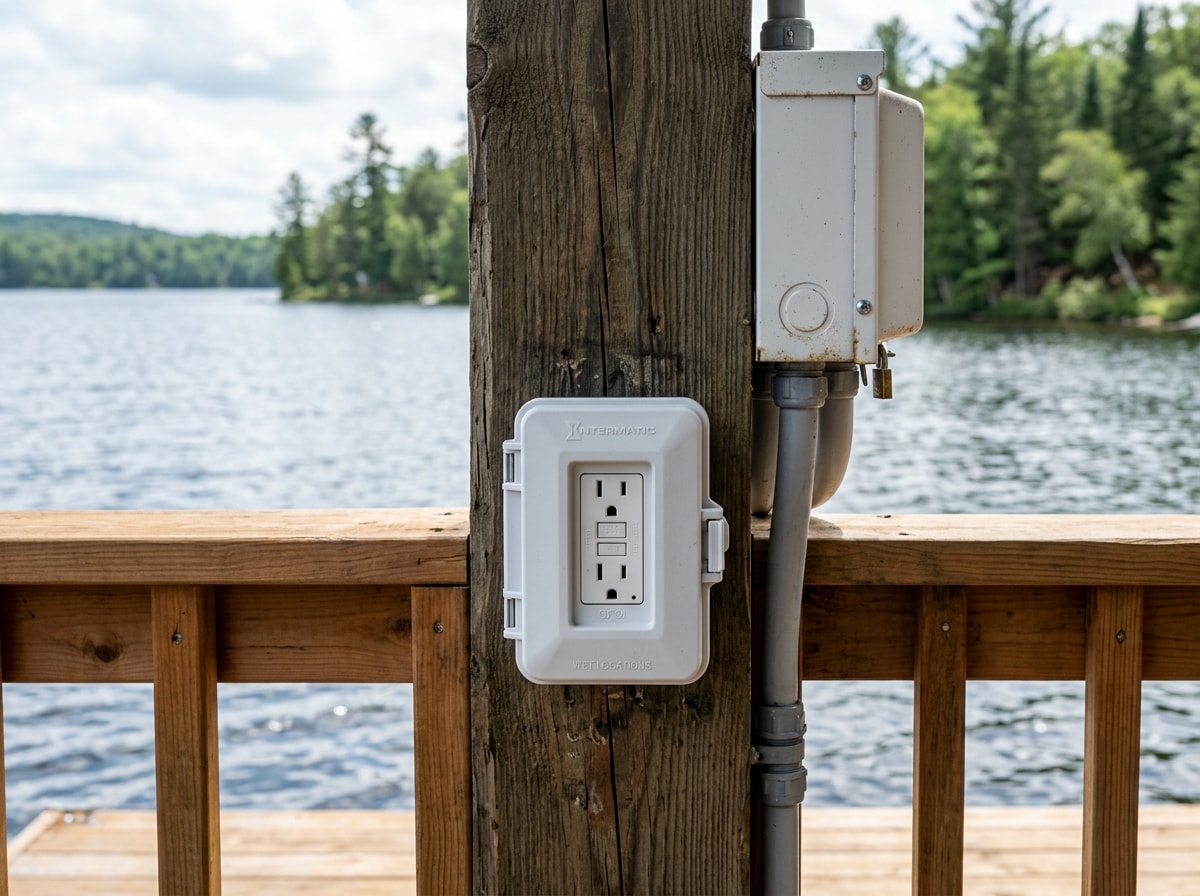
If your project includes a lakeside deck or outdoor kitchen, electrical placement should be part of that design from the start. Our Outdoor Kitchen Installation and Deck Construction services plan outlet and lighting locations before the structure goes up, not after.
Energy-Efficient Electrical Choices for New Homes
Lighting and panel choices made during construction affect utility bills for decades, not just the first year. According to the U.S. Department of Energy, residential LEDs, especially ENERGY STAR rated products, use at least 75% less energy, and last up to 25 times longer, than incandescent lighting .
For new construction, that means specifying LED-ready fixtures, right-sized panels, and smart circuit controls during rough-in rather than retrofitting them later, when it costs more to open walls back up.
Permits and Licensing: Who Pulls What in South Carolina
South Carolina splits contractor licensing across two boards, and knowing which one governs your project avoids a costly surprise mid-build. For residential electrical trade work, electrical work performed as a standalone trade falls under the Residential Builders Commission as a residential specialty contractor license for residential projects, or under the Contractor's Licensing Board Group 3 for commercial work .
| Project Type | License Type | Governing Board |
|---|---|---|
| New home build or addition | Residential Builder License | SC Residential Builders Commission |
| Standalone residential electrical trade work | Residential Specialty Contractor (Electrical) | SC Residential Builders Commission |
| Commercial electrical installation | Group 3 Electrical Contractor | SC Contractor's Licensing Board |
You can verify any contractor's active license status, classification, and expiration directly through the South Carolina Residential Builders Commission before signing a contract.
For projects that involve multiple trades managed under one schedule, our Construction Management in Lake Wylie, SC guide walks through how permitting and inspections get coordinated across a full build.
How to Vet an Electrical Construction Company Before You Sign
Not every company bidding on your project is licensed for the scope they're quoting. Before you commit, confirm:
- Active license status — check the business name against the state lookup, not just a license number printed on a truck.
- Bonding and insurance — ask for a certificate of insurance naming you or your GC, not just a verbal assurance.
- A written schedule — rough-in, inspection, and trim-out dates should be in the contract, not left open-ended.
- Recent local work — ask to see completed projects in your area, not just a portfolio from another state.
- Who pulls the permit — confirm in writing whether the GC or the electrical sub is the permit holder of record.
You can browse completed builds on our Projects page to see how we've sequenced electrical construction across past Lake Wylie homes.
Proudly Building Across Lake Wylie and York County
We manage electrical construction scheduling as part of full builds throughout Lake Wylie and the surrounding York County communities, including:
If your address falls near one of these areas, our crews already know the local inspectors and permitting process.
Ready to Plan Your Project?
Spargo Construction is a South Carolina general contractor managing new home builds, additions, and site work across Lake Wylie, with electrical construction scheduled and inspected as part of every project. Get a free estimate to talk through your scope, timeline, and panel or capacity needs before you break ground. You can also learn more about our full range of work on the Spargo Construction homepage.
FAQ
Does a general contractor handle electrical work, or do I need a separate electrician?
A general contractor manages the schedule and coordinates the trades, but in South Carolina, a licensed electrical contractor or residential specialty contractor performs and permits the actual wiring. Your GC should have that relationship already in place.
Who pulls the electrical permit for a new home build in Lake Wylie, SC?
Either the general contractor or the licensed electrical subcontractor can hold the permit, depending on how the contract is structured. Confirm this in writing before work starts so there's no confusion during inspection.
Do accessory dwelling units need a separate electrical panel in South Carolina?
Often, yes. Whether an ADU needs a subpanel or a full service upgrade depends on the existing home's panel capacity and the ADU's planned load, which should be calculated during design, not after framing.
What's the difference between a residential builder license and an electrical contractor license in South Carolina?
A Residential Builder License covers building or supervising residential construction. A Residential Specialty Contractor license (electrical) covers standalone electrical trade work. They're issued by the same board but cover different scopes of work.
Can I verify if a contractor is licensed in South Carolina before hiring?
Yes. The South Carolina Residential Builders Commission maintains a public license lookup where you can confirm active status, classification, and expiration before signing a contract.
How much does electrical rough-in cost for a new home?
Cost depends on square footage, panel amperage, number of circuits, and permit fees, so it's usually quoted as part of the overall build rather than a flat per-job rate. Ask for an itemized electrical allowance in your construction contract.