Commercial demolition contractors in Rock Hill, SC handle everything from a single-suite strip-out to a full industrial teardown, and the right crew can make or break your project timeline. We've pulled apart the City of Rock Hill's demolition permit checklist and the state's asbestos notification rules so you know exactly what to ask before signing a contract. Here's what separates a contractor who finishes on schedule from one who stalls at the permit counter.
What Is Commercial Demolition?
Commercial demolition is the structured removal of all or part of a non-residential building, such as an office, warehouse, or retail space, and it differs from residential work mainly in scale and regulatory complexity. A qualified demolition contractor typically moves through four phases: planning and permitting, mechanical structure removal, debris sorting, and site cleanup. Commercial building demolition often involves larger equipment, multi-tenant coordination, and stricter notification rules than a typical house teardown.
Commercial Demolition Services in Rock Hill, SC
A full-service demolition company in Rock Hill usually covers three broad categories: interior strip-outs, exterior site removal, and full structural teardowns. Each requires different equipment and scheduling, which is why scope matters from the first phone call. Spargo Construction handles all three categories for commercial clients across the York County and Charlotte metro area.
Commercial Interior Demolition
Interior demolition covers everything inside the walls during a tenant build-out or renovation: non-load-bearing partitions, drop ceilings, millwork, flooring, and MEP (mechanical, electrical, plumbing) removals. This is selective demolition, crews strip out what's being replaced while protecting the structure, systems, and finishes that stay. A strip-out for a restaurant buildout looks very different from one for an office remodel, so the plan has to match the space.
Concrete & Asphalt Removal
Site prep for commercial projects frequently calls for concrete and asphalt removal, including old parking lots, loading pads, sidewalks, and building footings. Parking lot demolition is one of the more common requests from property owners redeveloping a commercial lot. Haul-off of broken concrete and asphalt is typically bundled into the project scope rather than billed as a separate afterthought. See our concrete demolition services for how this fits into a broader site prep plan.
Full Structural & Industrial Demolition
Beyond interior and site work, most Rock Hill contractors also offer core demolition for structural elements, selective demolition for partial teardowns, and industrial demolition for larger facilities like plants, manufacturing buildings, and mills. A true full-service demolition company can scale a crew up or down depending on whether the job is a 2,000-square-foot retail strip-out or a sprawling industrial site. That range matters because it means you're not juggling multiple vendors for related work.
| Demolition Type | Typical Scope | Typical Timeline |
|---|---|---|
| Interior strip-out | Non-structural walls, ceilings, flooring, MEP | A few days to two weeks |
| Selective / partial demolition | Specific structural sections, additions | One to three weeks |
| Full structural teardown | Entire building, foundation to roof | Two to six-plus weeks |
| Industrial demolition | Plants, mills, large manufacturing facilities | Several weeks to months |
Industries & Property Types We Serve
Commercial demolition crews in Rock Hill regularly work across a wide mix of property types, each with its own layout and access challenges.
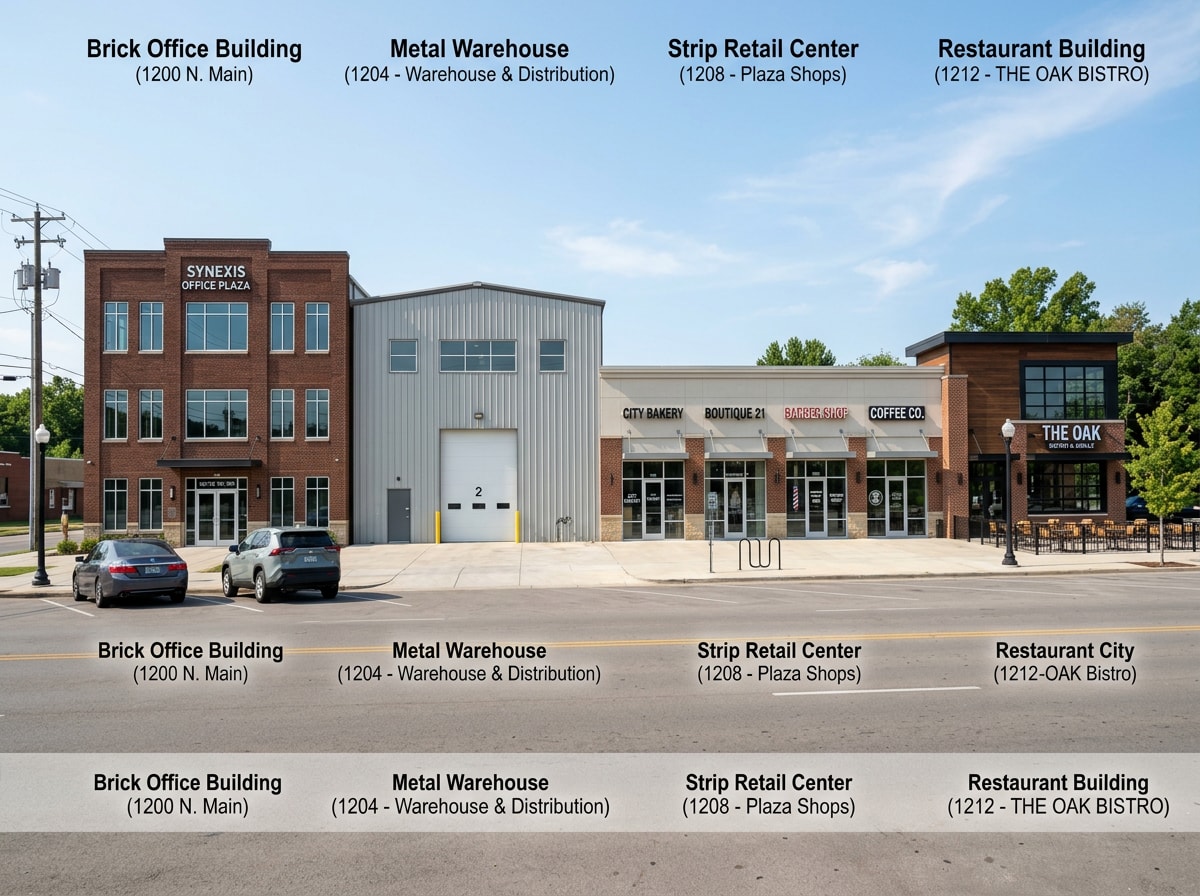
Offices, warehouses, restaurants, retail centers, and light-industrial buildings each come with different structural considerations, from suspended ceilings to heavy equipment pads. An experienced contractor adjusts both the crew size and equipment mix based on the property type rather than using a one-size-fits-all approach. You can browse examples of completed work on our projects page.
Fast Quote Checklist
Having a few basic details ready speeds up your demolition quote significantly. Before calling, gather:
- Property address and contact info
- Whether you need interior-only or full demolition
- Approximate square footage and number of floors
- Any slab or asphalt scope
- Your target start date
This lets a contractor give you a realistic project scope and free estimate without multiple back-and-forth calls. Ready to move forward? Get a free estimate and a team member will follow up with next steps.
Permits & Regulations: What Rock Hill Projects Must Clear First
This is the part most contractor websites skip, and it's usually where timelines go sideways. The City of Rock Hill requires a commercial demolition permit before any structure comes down, and the requirements differ depending on whether the work is interior-only or affects the exterior.
For exterior or whole-structure demolitions, submit stormwater or civil plans either before or at the same time as the demolition permit application, and before the permit can be issued, those plans must be approved, a pre-construction meeting with City staff must have taken place, and erosion control measures must be in place and approved. Skipping that meeting is one of the most common reasons a demolition start date slips by two or three weeks.
On top of the city permit, the State of South Carolina Department of Environmental Services (SCDES) requires contractors to submit an application for asbestos removal whether a building inspector finds asbestos present or not, and the State's letter of approval must be provided to the City as part of the demolition permit application. Statewide, an ePermitting application must be submitted to SCDES at least 10 working days in advance of demolition, even if a building inspector determines that asbestos is not present at the facility.
That 10-working-day window is a hard floor, not a suggestion. Build it into your schedule before you set a demolition start date, not after. Full details on notification thresholds and required documentation are published directly on SCDES's renovations and demolitions page.
Scope Confirmation & Site Assessment
Scope confirmation is the first real step in demolition planning, meaning a review of building plans, photos, and current site conditions before any equipment shows up. This is also the point where a site assessment should flag utilities, shared walls, and hazardous materials. Equipment operators work under federal safety rules the whole time; the preparatory operations standard accounts for up to three-fourths of citations on a demolition worksite, and the requirement for an engineering survey before starting demolition accounts for more than half of those citations. A contractor who treats the survey as a formality rather than a real inspection is the one most likely to get flagged. Full standards are published on OSHA's demolition page.
Why Choose a Local Commercial Demolition Contractor
Local experience counts for more than it might seem. A Rock Hill-based crew already understands regional permitting offices, typical soil and foundation conditions, and how to schedule around area traffic and business hours. Look for a contractor with experienced crews, owned (not rented) equipment, documented safety protocols, and clear communication from the first site visit through final cleanup. Spargo Construction works across the broader region, including Rock Hill and neighboring Fort Mill and York County communities.
Accountability matters too. A contractor who answers questions directly and keeps you updated through each phase is generally easier to work with than one who disappears between the quote and the start date. In our experience, the projects that stay on schedule are the ones where the contractor walks the client through the city's stormwater and pre-construction meeting requirements before the quote is even signed, not after the permit gets kicked back.
Equipment Used for Commercial Demolition
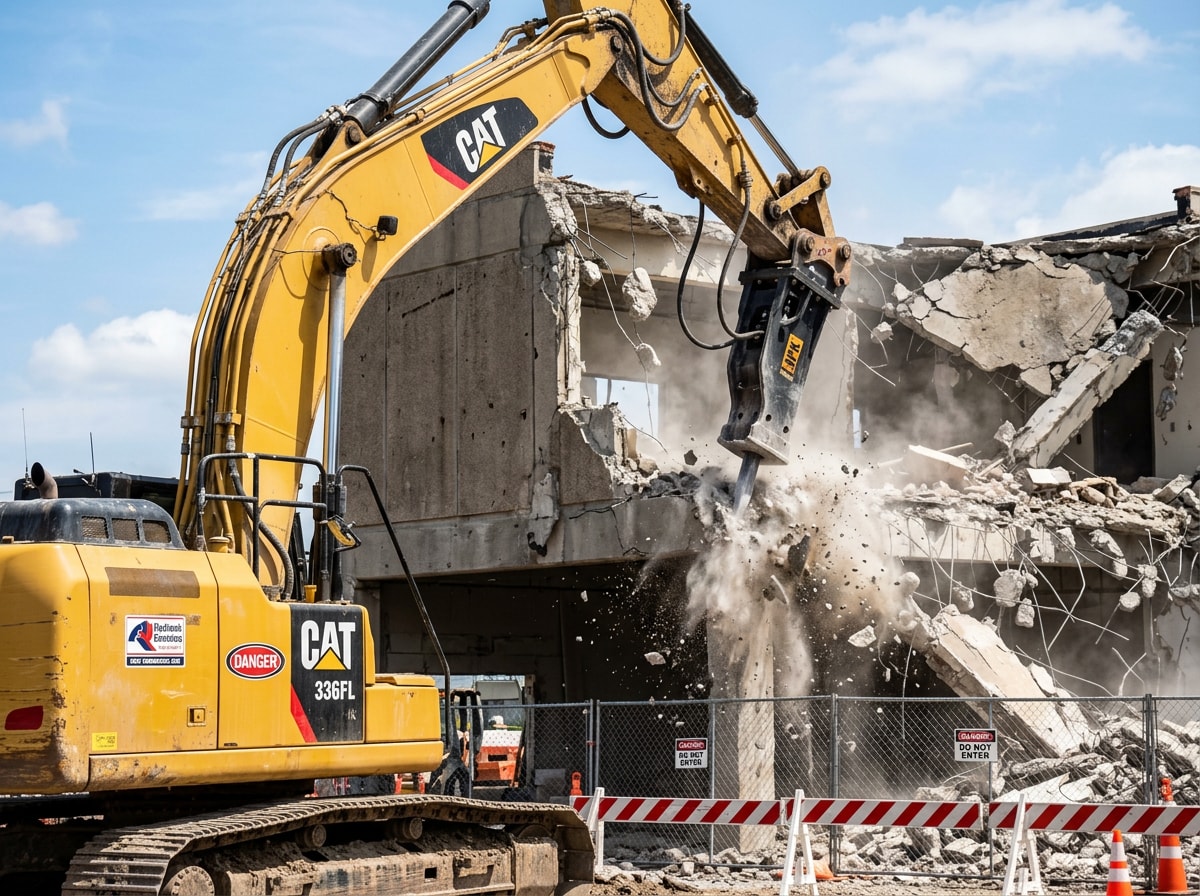
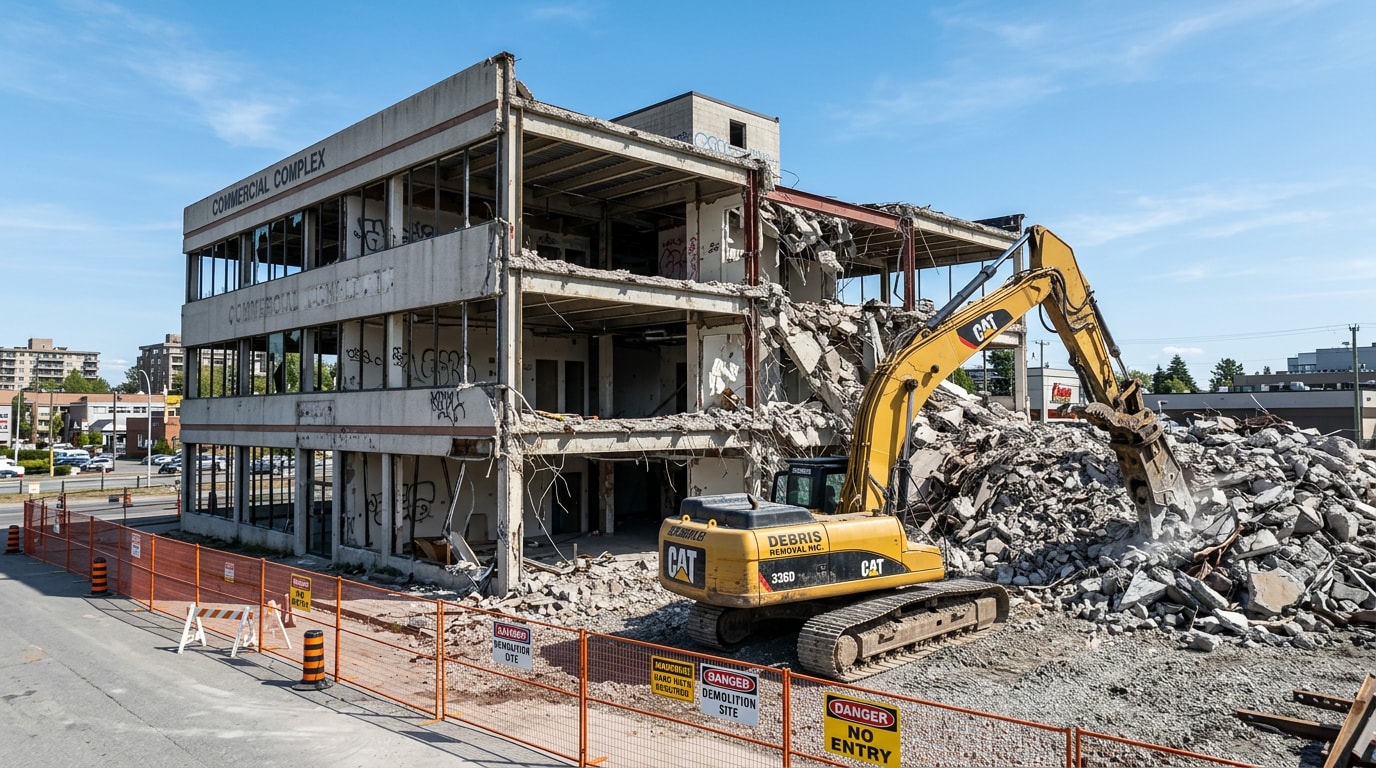
Different demolition jobs call for different equipment, and the right choice affects both speed and safety. A hydraulic excavator fitted with a breaker attachment is the workhorse for most commercial jobs, precise, relatively fast, and well-suited to controlled, section-by-section removal near occupied buildings. Wrecking balls, by contrast, are rarely used on modern commercial sites; they're less precise and harder to control around neighboring structures, though they still show up occasionally on isolated, free-standing teardowns. High-reach excavators extend that same hydraulic approach to taller structures, allowing crews to work from the ground up without putting workers at height.
Dust suppression systems, typically water-based, run alongside most of this equipment to manage airborne debris and meet local environmental expectations. The right equipment choice usually comes down to building height, surrounding structures, and how much precision the job demands.
Benefits of Commercial Demolition
Commercial demolition clears the way for site redevelopment, giving property owners a clean slate instead of working around an outdated or unsafe structure. Removing deteriorating buildings eliminates safety hazards like unstable framing or old electrical systems, which can raise property value once the site is cleared. Responsible contractors also sort and recycle debris, including concrete, metal, and wood, reducing what ends up in a landfill and often lowering disposal costs in the process.
If your plan after demolition includes new construction or a tenant build-out, it helps to line up that next phase early. Our guide on commercial construction and renovation in Clover, SC walks through what comes after the site is cleared.
FAQ
Do you handle interior or partial demolition for renovations?
Yes. Interior and partial demolition for renovation prep typically includes non-structural walls, ceilings, flooring, and fixtures ahead of a remodel or tenant build-out.
What factors affect the cost of a commercial demolition project?
Demolition cost factors include building size, structural complexity, materials involved, and whether hazardous materials like asbestos require specialized removal before standard demolition can begin. SCDES and city permit fees also factor into the final number.
Do I need a permit for commercial demolition in Rock Hill, SC?
Yes. The City of Rock Hill requires a demolition permit, and for exterior work, stormwater or civil plans and a pre-construction meeting with city staff must happen before the permit is issued. You'll also need SCDES approval on the asbestos side before the city will sign off.
How long does the asbestos notification process take in South Carolina?
An ePermitting application must be submitted to SCDES at least 10 working days in advance of demolition, even if a building inspector determines that asbestos is not present. Plan your start date around that window, not the other way around.
Do you handle both commercial and residential buildings?
Yes, most full-service demolition contractors handle commercial, industrial, and residential building types, adjusting crew size and equipment to match each project.
How long does a commercial demolition project take?
Timelines vary widely. A small interior strip-out might take a few days, while a full building teardown can take several weeks depending on size, site conditions, and how quickly permits and asbestos notifications clear.
Ready to get a scope and timeline for your project? Request your free estimate and we'll walk you through the permit sequence before work ever starts.